CHENLU Engineering Team | Trailer Engineering and Customization Team | Updated September 9, 2026
Fuel tanker trailer capacity cannot be selected from volume alone. Buyers must match liquid density, legal payload, trailer tare weight, compartment layout, axle loading and route restrictions. A 40,000-litre tank is one available configuration, not a universal answer for every fuel, tractor or destination market.
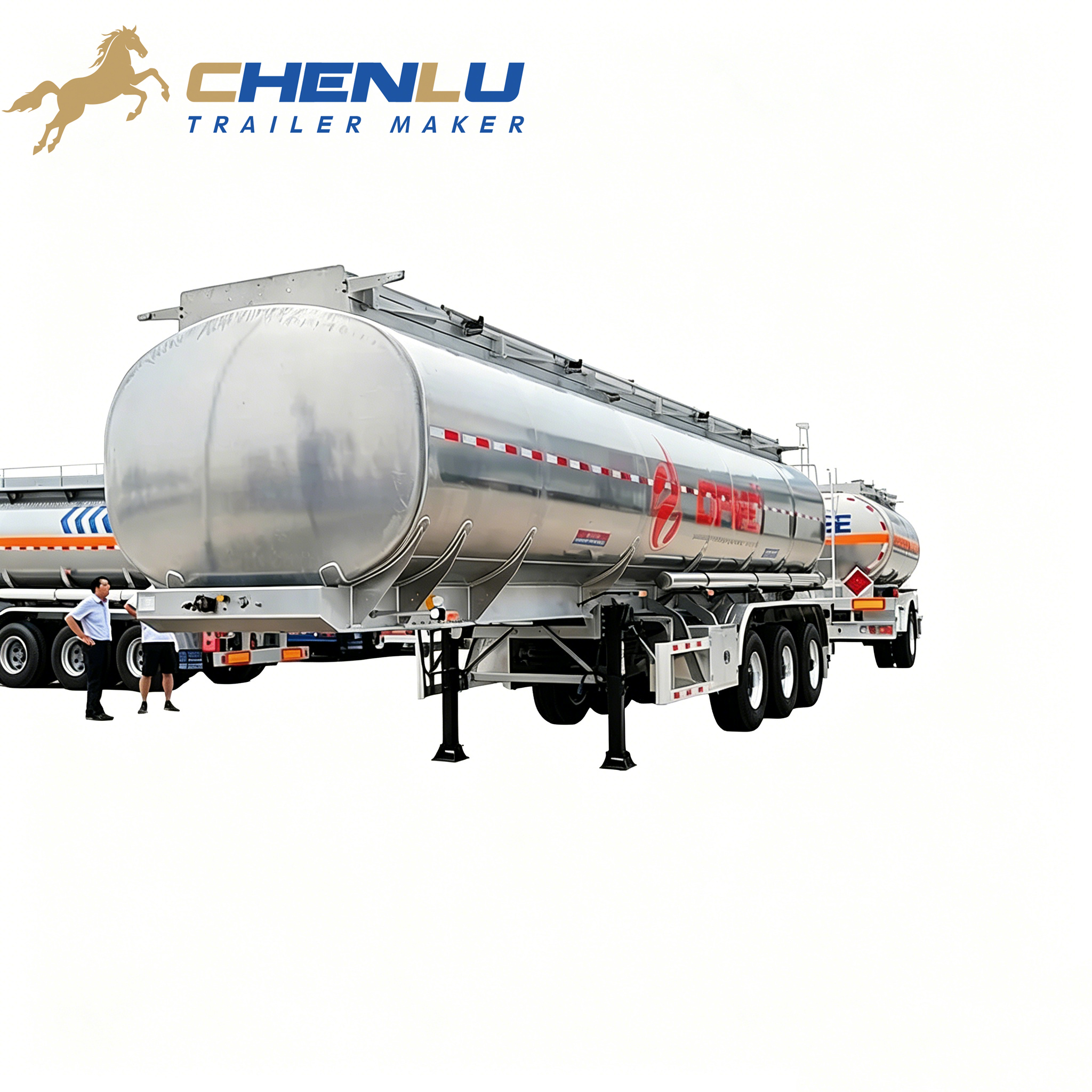
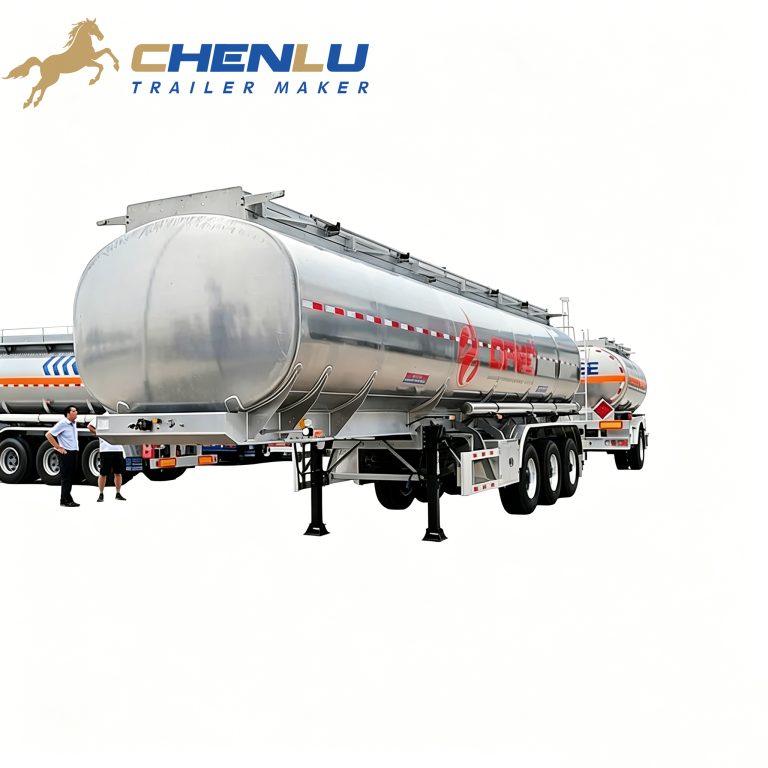
A published 40,000-litre aluminum tanker configuration illustrates why material, axles and compartment planning must be evaluated together.
Fuel tanker trailer capacity starts with payload, not tank volume
The first calculation is the mass of the liquid. Multiply the planned liquid volume by the operating density, then compare that mass with the permitted payload after deducting the tractor and trailer tare weights. Density changes the result: the same tank volume can create a different axle and gross-combination mass when the product changes.
Do not treat the tank’s geometric volume as its guaranteed usable loading volume. Required outage, thermal expansion allowance, loading procedure and compartment rules can reduce the quantity carried. The applicable authority and cargo-handling procedure determine the final fill limit.
A practical capacity calculation sequence
Define the liquid: record the exact product, operating density, temperature range and compatibility requirements.
Confirm route limits: check permitted gross mass, axle-group limits, dimensions and any restricted roads for the destination market.
Establish tare weight: include the selected tank material, axles, suspension, pump, piping, vapor-recovery equipment, guards and other fitted accessories.
Calculate payload: subtract the actual tractor and trailer tare weights from the permitted combination mass, while also checking each axle group.
Convert mass to volume: divide the allowable liquid payload by the operating density.
Apply filling constraints: account for outage, compartment loading rules and the operating procedure before setting the nominal tank volume.
What changes the usable capacity?
Factor
Capacity effect
Buyer input needed
Liquid density
Higher density reaches the mass limit at a lower volume
Product and operating density
Tank material
Material and structural design affect tare weight and available payload
Carbon steel, aluminum or another compatible material
Compartment plan
Bulkheads, piping and valves add weight but allow separated deliveries
Number of products, drops and unloading sequence
Axle arrangement
Total volume can still overload one axle group
Tractor layout, axle count and legal axle limits
Pump and accessories
Equipment adds tare weight and changes space allocation
Loading, discharge and vapor-control requirements
Route and temperature
Road restrictions and expansion allowance can reduce loading quantity
Countries, route conditions and temperature range
CHENLU fuel tanker configurations
CHENLU publicly presents carbon-steel fuel tanker trailers with three- and four-axle configurations and single- or multi-compartment options for gasoline, diesel and other petroleum products. The company also shows a 40,000-litre aluminum tanker trailer with multi-compartment options; pump, vapor-recovery and insulation configurations may be specified for the selected application.
These details define available engineering directions, not a promise that every buyer should order the same capacity. Tank material, compartment arrangement, discharge equipment and documentation must be matched to the cargo and destination requirements.
Single compartment or multiple compartments?
A single-compartment tank simplifies the internal arrangement and suits one compatible product delivered as one load. Multiple compartments can serve different products or delivery points, but bulkheads, valves and pipework add tare weight and operational complexity. Partial loading also needs careful planning because liquid movement and uneven compartment use can affect axle distribution and stability.
Compared with generic capacity tables that list one number, a compartment-by-compartment load plan reveals whether each delivery stage remains within the permitted axle and gross masses.
Common sizing mistakes
Ordering by litres only: a nominal volume does not prove that the loaded combination meets mass limits.
Ignoring tractor tare: two tractors coupled to the same tanker can leave different payload margins.
Assuming every compartment can be partly filled: the loading sequence and liquid movement require an approved operating plan.
Using one country’s limits elsewhere: axle, dimension and dangerous-goods requirements vary by market and route.
Adding equipment late: pumps, hose carriers and vapor hardware consume payload and may alter weight distribution.
Compliance checks belong in the specification
The UNECE World Forum for Harmonization of Vehicle Regulations maintains international vehicle regulations covering systems such as braking, lighting, tires and coupling devices. The exact regulations and dangerous-goods rules depend on the product, component, destination and approval route. A general compliance statement cannot replace order-specific documentation.
Fuel tanker trailer capacity FAQ
What is a typical fuel tanker trailer capacity?
There is no single safe universal capacity. CHENLU publicly shows a 40,000-litre aluminum configuration, while the correct order size must still be calculated from liquid density, tare weight, compartments, axles and destination-market limits.
Does aluminum increase payload?
Material choice affects tare weight, corrosion compatibility, fabrication and cost. A lower trailer tare can create more payload margin under a fixed gross limit, but the tank design and cargo compatibility must be assessed as a complete specification.
How many compartments should a tanker have?
Base the count on the number of products, delivery points, loading sequence and cleaning requirements. More compartments add delivery flexibility but also add internal structure, valves, piping and operating steps.
Can the full nominal volume always be loaded?
No. Payload mass, axle distribution, filling allowance, temperature, route limits and compartment rules can restrict the usable load below the geometric tank volume.
What information is needed for a quotation?
Provide the liquid and density, target volume, compartment plan, loading and discharge method, tractor configuration, destination country, route conditions and required accessories. Pricing requires a configuration-specific quotation.
Prepare a capacity request that can be checked
Start with the liquid mass and route limits, then compare the tank arrangement using the tanker trailer dimensions guide. Send the resulting cargo, volume, compartment, axle and destination details through the CHENLU contact page so the proposed configuration can be checked against the intended operation.




 09 September 2026