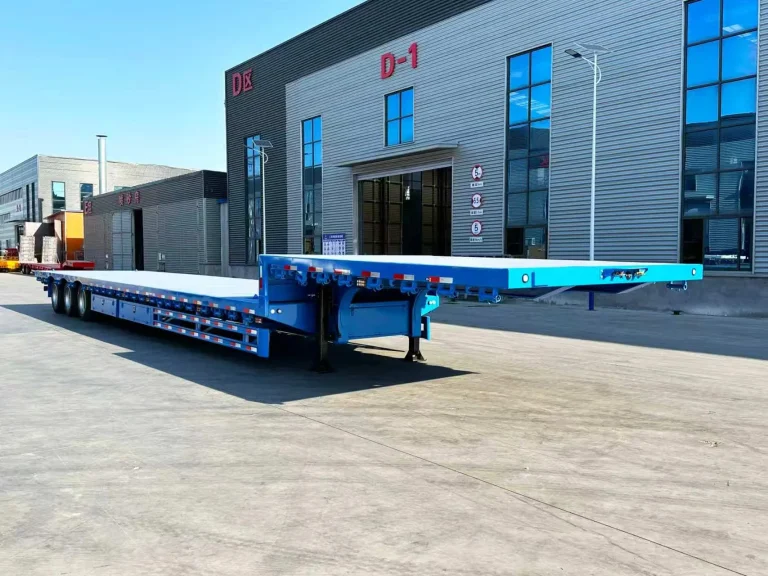
A badly loaded trailer can look safe at low speed but become unstable at highway speed. Too much weight behind the axle can cause trailer sway, poor handling, and even loss of control. The 60/40 rule gives you a simple starting point for safer trailer loading.
The 60/40 rule for trailers means placing about 60% of the cargo weight in the front half of the trailer and about 40% in the rear half. This helps create enough tongue weight, improves balance, and reduces trailer sway. For many bumper-pull trailers, tongue weight is commonly around 10% to 15% of the total loaded trailer weight.

Esquema del artículo
What does the 60/40 rule mean for trailer loading?
Why does trailer weight distribution matter for safe towing?
How does tongue weight affect trailer sway?
Where should heavy items be placed on a trailer?
What happens if a trailer is loaded too far behind the axle?
How do you calculate trailer weight, cargo weight, and tongue weight?
Does the 60/40 rule apply to utility trailers, gooseneck trailers, and semi trailers?
What role do axle position, suspension, and hitch setup play?
How can B2B fleet buyers choose a trailer that is easier to load safely?
What checklist should you use before towing at highway speed?
What Does the 60/40 Rule Mean for Trailer Loading?
The 60/40 rule is a practical trailer loading guideline. It means around 60% of the load should sit in the front half of the trailer, closer to the tow vehicle, and around 40% should sit behind the axle area. This does not mean every box must be measured one by one. It means the heavier cargo should not all sit at the rear.
For a simple example, if your cargo weight is 1,000 pounds, about 600 pounds should be forward and about 400 pounds should be toward the rear. If your total loaded trailer weight is 3,000 pounds, your tongue weight should often land near the 10% to 15% range for many bumper-pull trailers, depending on the trailer design and manufacturer guidance.
In simple words: keep the trailer slightly front-heavy, not rear-heavy. That front-biased balance helps the trailer follow the tow vehicle instead of pushing, swaying, or fishtailing behind it.
Why Does Trailer Weight Distribution Matter for Safe Towing?
Trailer weight distribution affects how the trailer behaves on the road. A trailer is not just a box with wheels. It is a moving system connected to a tow vehicle through a hitch, coupler, or kingpin. When weight is placed correctly, the trailer tracks smoothly. When weight is placed poorly, the trailer can become unstable.
Good weight distribution helps with:
- Handling when turning or changing lanes
- Brake control during stopping
- Tire contact and tire wear
- Suspension balance
- Straight tracking at highway speed
- Reduced risk of trailer sway
This matters for small users loading a utility trailer, but it matters even more for commercial transport. Fleet owners, logistics operators, construction companies, mining contractors, and cement transport providers move valuable cargo every day. One unstable trailer can damage cargo, delay delivery, and create serious safety risk.
As a China-based semi trailer manufacturer, we often remind buyers that trailer safety starts before the truck moves. Design matters. Axle rating matters. But loading your trailer correctly is still part of daily operation.
How Does Tongue Weight Affect Trailer Sway?
Tongue weight is the downward force the trailer puts on the hitch. If the tongue weight is too light, the trailer may sway side to side. If it is too heavy, it can overload the rear axle of the tow vehicle, reduce steering control, and strain the suspension.
For many conventional bumper-pull trailers, the common guideline is about 10% to 15% of the total loaded trailer weight on the hitch. California DMV guidance says hitch weights for travel trailers should typically be at least 10% of gross trailer weight for acceptable handling, and in some cases 15% or higher.
Here is a simple table:
| Total Loaded Trailer Weight |
Common 10% Tongue Weight |
Common 15% Tongue Weight |
| 2,000 lb |
200 lb |
300 lb |
| 3,000 lb |
300 pounds |
450 lb |
| 5,000 lb |
500 lb |
750 lb |
| 10,000 lb |
1,000 lb |
1,500 lb |
The exact rating always depends on the trailer, hitch, tow vehicle, and manufacturer instructions. The 60/40 rule is not a replacement for proper calculation. It is a practical starting point that helps you create enough tongue weight.

Semirremolque esqueleto
Where Should Heavy Items Be Placed on a Trailer?
Heavy items should usually sit low and forward of the axle area. Do not stack heavy cargo high at the back. Keep the center of gravity low, and keep the load balanced from side-to-side.
A good cargo placement method looks like this:
- Put the heaviest items on the floor.
- Place more weight toward the front half of the trailer.
- Keep left and right weight as even as possible.
- Secure every load so it cannot shift.
- Check the coupler, hitch ball, chains, brake connection, and lights before driving.
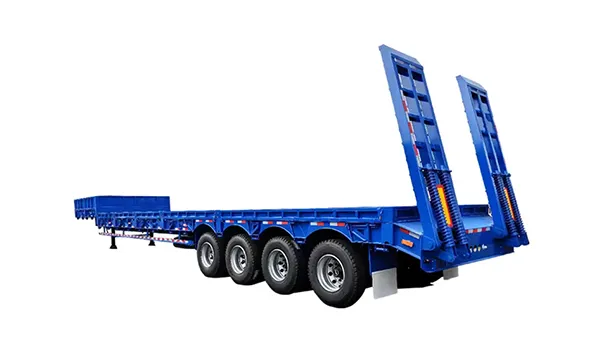
For commercial trailers, the same idea becomes more technical. A semirremolque de plataforma, lowbed trailer, skeleton trailer, tanker trailer, dump trailer, or container chassis may have different loading requirements. Heavy machinery, container cargo, bulk cement, fuel, and mining material all require careful placement and securement.
What Happens If a Trailer Is Loaded Too Far Behind the Axle?
A trailer loaded too far behind the axle can become unstable. The rear weight pulls upward on the hitch and reduces tongue weight. This can trigger side-to-side oscillation, also called trailer sway or fishtailing.
At low speed, the problem may look small. At highway speed, it can grow fast. A small steering correction, wind gust, passing truck, uneven road, or sudden brake action can make the trailer sway harder. If the driver overcorrects, the situation can move toward loss of control.
Rear-heavy loading may cause:
- Low weight on the hitch
- Poor stability
- More trailer sway
- Fishtailing
- Uneven tire wear
- Stress on axle and suspension parts
- Reduced tow vehicle control
This is why the 60/40 rule is useful. It helps prevent a rear-heavy condition before it starts. Good trailer loading is not only about carrying cargo. It is about managing physics in a safe and predictable way.
How Do You Calculate Trailer Weight, Cargo Weight, and Tongue Weight?
To calculate trailer loading, start with three numbers: empty trailer weight, cargo weight, and total loaded trailer weight. Then estimate or measure tongue weight.
| Term |
Meaning |
| Empty trailer weight |
Trailer weight without cargo |
| Peso de la carga |
Weight of goods, equipment, or material loaded on the trailer |
| Total trailer weight |
Empty trailer plus cargo |
| Tongue weight |
Downward weight on the hitch |
| Capacidad de carga |
How much cargo the trailer can legally and safely carry |
Example:
- Empty trailer: 2,000 lb
- Cargo: 3,000 lb
- Total loaded trailer weight: 5,000 lb
- Common tongue weight range for many bumper-pull trailers: 500–750 lb
You can measure tongue weight with a tongue weight scale, commercial scale, or in smaller cases, carefully using bathroom scales with the right method and safety precautions. Etrailer explains several ways to measure tongue weight, including a tongue weight scale, bathroom scale, or commercial scale depending on trailer size.
The most important rule is simple: never exceed the trailer’s rating, axle rating, tire rating, hitch rating, or tow vehicle rating. A trailer may look strong, but every component has a limit.
Does the 60/40 Rule Apply to Utility Trailers, Gooseneck Trailers, and Semi Trailers?
The 60/40 rule is most commonly discussed for bumper-pull trailers, moving trailers, and utility trailer loading. It is helpful because these trailers depend strongly on tongue weight at the hitch.
For gooseneck and fifth-wheel trailers, the idea of proper front-to-rear balance still matters, but the connection point and weight transfer are different. Etrailer notes that fifth-wheel and gooseneck trailers often use pin weight rather than standard tongue weight, and the target percentage can be higher than bumper-pull trailers.
For semi trailers, the rule should be used carefully. A semi trailer is not loaded only by the 60/40 rule. Fleet operators must consider:
- Kingpin load
- Tandem axle load
- Rear axle group
- Legal axle weight limits
- Cargo placement
- Road regulation
- Chassis structure
- Tipo de suspensión
- Load center
- Type of cargo
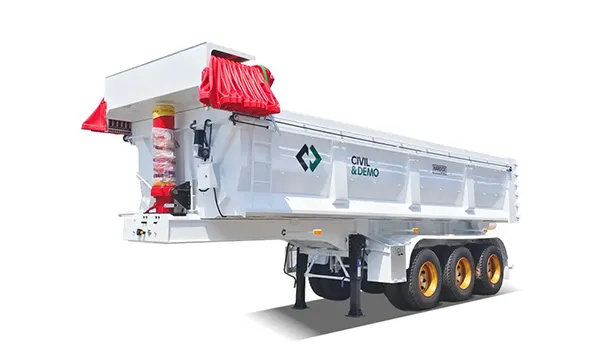
For example, a tanker trailer has liquid movement risk. A dump trailer must handle bulk material and unloading angle. A lowbed trailer carrying heavy equipment must manage concentrated point loads. A skeleton trailer or chasis para contenedores must match container size and lock position. So, the 60/40 rule is a useful concept, but semi trailer loading needs a more precise load plan.

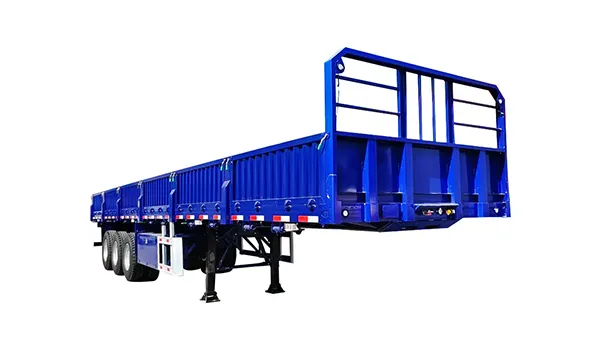
remolque de cuello de cisne
What Role Do Axle Position, Suspension, and Hitch Setup Play?
Axle position strongly affects trailer weight distribution. If the axle sits too far forward, the trailer may become too tongue-heavy. If the axle sits too far backward, tongue weight may increase, but rear structure and turning behavior may change. Trailer design is a balance of load capacity, stability, turning, tire wear, and legal axle loading.
The hitch setup matters too. A weight distribution hitch can help move weight more evenly across the tow vehicle and trailer axles in some bumper-pull applications. NHTSA interpretation material notes that tongue weight is generally added to the rear of the towing vehicle and that load-leveling hitches can distribute this loading over the vehicle.
For commercial buyers, the trailer should be selected based on real cargo. Do not choose only by price. Choose by operating route, cargo type, loading method, axle configuration, suspension, steel structure, braking system, and long-term maintenance requirements.
A good trailer setup should help the driver steer, brake, and manage the load with confidence.
How Can B2B Fleet Buyers Choose a Trailer That Is Easier to Load Safely?
Fleet owners and importers should think beyond the trailer model name. A flatbed semi trailer, skeleton trailer, lowbed trailer, remolque cisterna, dump trailer, container chassis, bulk cement trailer, or special transport vehicle should match the cargo and working environment.
When we support global B2B buyers, we usually start with these questions:
| Buyer Question |
Por qué es importante |
| What cargo will the trailer carry? |
Steel, container, fuel, cement, machinery, mining material, or bulk cargo all load differently |
| What is the maximum loaded weight? |
Prevents overload and axle stress |
| Where is the cargo center of gravity? |
Helps stability and handling |
| How will cargo be loaded and unloaded? |
Crane, forklift, ramp, pump, silo, or dump operation affects design |
| What road conditions will the trailer face? |
Highway, construction site, mine road, and port yard need different structure |
| Are local axle weight rules strict? |
Helps avoid fines and unsafe loading |
| Do you need standard or custom design? |
Custom specs may improve safety and productivity |
A reliable semi trailer manufacturer should help buyers review load distribution, structure strength, braking system, axle rating, suspension, and cargo securement points. This is especially important for construction companies, mining operators, heavy equipment transport contractors, fuel and cement transport providers, and logistics fleets.
What Checklist Should You Use Before Towing at Highway Speed?
Before towing, use a simple checklist. It takes a few minutes and can prevent big problems.
Trailer loading checklist:
- Check total trailer weight and cargo weight.
- Confirm the trailer and tow vehicle ratings.
- Use the 60/40 rule as a starting point for cargo placement.
- Keep heavy items low and forward.
- Keep side to side balance even.
- Make sure cargo cannot shift backward, forward, or sideways.
- Check tongue weight or hitch weight.
- Inspect tire pressure and tire condition.
- Confirm brake connection and lights.
- Check coupler, hitch ball, chains, pins, and safety locks.
- Drive slowly at first and feel the handling.
- Stop and re-check if the trailer feels unstable.
If the trailer begins to sway, do not make sharp steering moves. Reduce speed smoothly and stop in a safe place. Then check load balance, hitch setup, tire pressure, cargo securement, and weight distribution.
Case Study: Why a Small Loading Mistake Can Create a Big Road Problem
Imagine a contractor loading a utility trailer with tools, steel parts, and a portable compressor. The heaviest machine sits behind the axle because it was easiest to load last. The trailer looks fine in the yard. The truck pulls away normally.
At highway speed, the driver feels the trailer lean and swing slightly. A passing truck creates wind pressure. The trailer starts fishtailing. The driver slows down and exits. After checking the trailer, the team moves the heavy items forward and secures them lower. The trailer becomes much easier to tow.
This case is simple, but the lesson is powerful: cargo placement changes road behavior.
Now scale that up. A fleet hauler moving excavators on a remolque de plataforma baja, cement in a bulk trailer, or fuel in a tanker trailer has less room for mistakes. The heavier the load, the more precise the loading plan must be.
Common Trailer Loading Mistakes to Avoid
Many trailer problems come from simple mistakes. The good news is that most are easy to prevent.
| Mistake |
Riesgo |
Better Practice |
| Too much weight behind the axle |
Trailer sway and unstable handling |
Move heavier cargo forward |
| Too much tongue weight |
Rear axle overload and poor steering |
Rebalance and check ratings |
| Uneven side-to-side loading |
Lean, tire wear, and poor control |
Balance left and right weight |
| Loose cargo |
Load shift during braking or turning |
Strap and block cargo firmly |
| Exceeding rating |
Structural, tire, axle, or brake failure |
Follow GVWR, GAWR, tire, and hitch limits |
| High center of gravity |
More roll risk |
Keep heavy items low |
FAQs About the 60/40 Rule for Trailers
What is the 60/40 rule for trailers?
The 60/40 rule means placing about 60% of cargo weight in the front half of the trailer and 40% in the rear half. It helps create better trailer weight distribution and can reduce trailer sway.
Is the 60/40 rule always required?
No. It is a general guideline, not a universal law. Always follow the trailer manufacturer’s instructions, tow vehicle rating, axle rating, hitch rating, and local transport rules.
What happens if the trailer has too little tongue weight?
Too little tongue weight can make the trailer unstable. It may sway, fishtail, or become hard to control, especially at highway speed.
Can too much tongue weight also be dangerous?
Yes. Too much weight on the hitch can overload the rear axle of the tow vehicle, reduce steering control, strain the suspension, and increase braking distance.
Does the 60/40 rule apply to semi trailers?
Not directly in the same way as a utility trailer. Semi trailers require more precise planning based on kingpin load, tandem axle weight, cargo type, axle position, suspension, and legal weight limits.
How can I measure tongue weight?
You can use a tongue weight scale, a commercial scale, or approved measurement methods for lighter trailers. For heavy-duty and commercial trailers, professional weighing is safer and more accurate.
Puntos clave
The 60/40 rule means about 60% of cargo weight forward and 40% behind.
It helps create enough tongue weight and improves trailer stability.
Many bumper-pull trailers commonly target around 10% to 15% tongue weight, depending on design and manufacturer guidance.
Heavy items should sit low, forward, and evenly side-to-side.
Rear-heavy loading can cause trailer sway, fishtailing, and loss of control.
Never exceed trailer, axle, tire, hitch, or tow vehicle ratings.
Utility trailers, gooseneck trailers, and semi trailers need different loading logic.
For B2B buyers, trailer design should match cargo type, road conditions, loading method, and local axle regulations.
A good semi trailer supplier should support standard and customized trailer solutions for safe, stable, long-term operation.




 24 April 2026