Sidewall Trailer vs Fence Trailer: Which Cargo Body Fits Your Work?
21 September 2026
Equipo de ingeniería de CHENLU | Trailer Engineering and Customization Team | Updated September 21, 2026
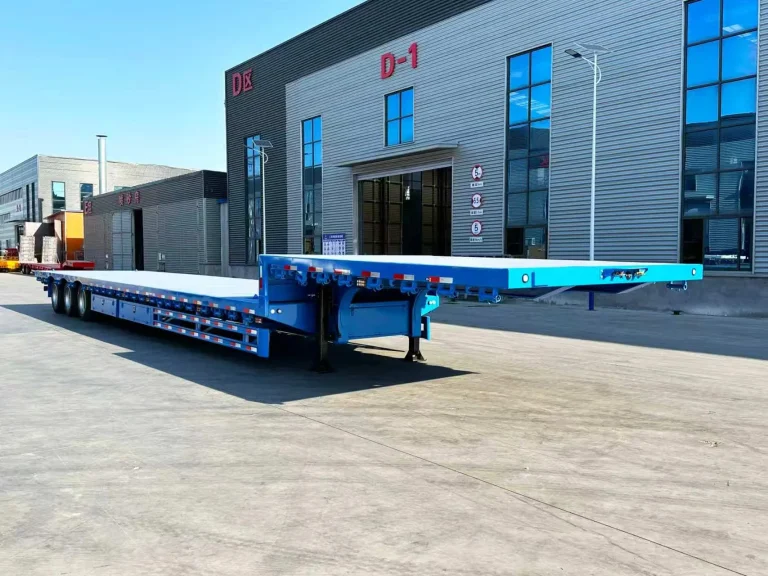
A sidewall trailer vs fence trailer decision depends on the cargo’s shape, containment needs, loading method and route. Sidewall trailers use lower opening panels for flexible side access. Fence trailers add a taller stake or fence structure for bulky loads that need more vertical containment. Neither body is the right choice for every operation.
Sidewall and fence structures should be selected around the real cargo, loading equipment and destination-market requirements.
Sidewall trailer vs fence trailer at a glance
Decision factor
Sidewall trailer
Fence trailer
Body structure
Lower side panels, commonly designed to open for loading access
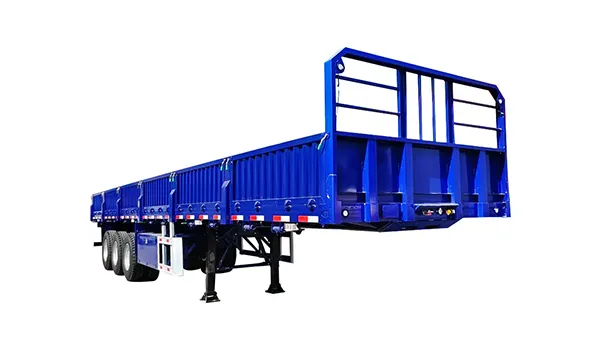
Taller reinforced fence or stake structure above the platform
Cargo fit
Construction materials, agricultural products and general bulk cargo that need a defined lower body
Bulky general cargo, agricultural materials and loads requiring higher side containment
Loading access
Opening panels can provide direct side access along the deck
Access depends on the selected fence-section and opening arrangement
Tare and complexity
Panel, hinge and latch quantity affect weight and service work
Additional fence structure and joints affect weight and inspection points
Axle examples
CHENLU publicly shows tri-axle and 60-ton configurations
CHENLU publicly shows 3-, 4- and 5-axle configurations
Primary buyer question
Can the panels provide the required access while containing the load?
Does the cargo need the added fence height, and how will it be secured?
The displayed axle and load configurations are product examples, not universal ratings. Final payload depends on the frame, axle group, suspension, tires, tractor, cargo distribution and destination-market limits.
When a sidewall semi trailer fits the job
A sidewall semi trailer is useful when cargo needs a platform with a defined perimeter but still requires frequent side loading or unloading. Opening panels can shorten access time for forklifts or manual handling when the loading plan allows work from the side. The structure suits bagged goods, building materials, agricultural products and other general cargo when the selected panel height and securing system match the load.
CHENLU publicly presents a 3 axle sidewall semi trailer and other drop-side configurations. The product directory also shows a 60-ton example. Buyers should treat these as available engineering directions and confirm the actual rated load, body dimensions and component specification on the order drawing.
The main tradeoff is the number of moving body parts. Hinges, latches, removable posts and panel alignment need routine inspection. A damaged latch can affect containment even when the main frame remains serviceable.
Where a fence semi trailer has an advantage
A fence semi trailer adds height through reinforced side fences or stakes. That structure can help contain bulky agricultural materials and general cargo that rises above a low sidewall. It does not replace load securing: straps, blocking, packaging and the loading plan still have to control movement in every direction.
CHENLU’s published range includes 3 axle, 4 axle and 5 axle fence configurations. More axles do not automatically mean more legal payload. The complete combination must remain within axle-group, tire, brake, frame and gross-mass limits.
A taller body creates more structure to inspect and may increase tare and wind exposure. Loading equipment also needs enough clearance to work around the fence sections. These costs are justified only when the cargo and operating method benefit from the added containment height.
Use the cargo to choose the body
Describe the load: record mass, dimensions, packaging, center of gravity and whether pieces can settle or shift.
Map the loading process: identify forklift access, crane clearance, dock height and which side panels or fence sections must open.
Set containment height: choose the lowest structure that safely fits the cargo and securing plan instead of ordering extra steel without an operating reason.
Check weight distribution: calculate kingpin and axle-group reactions for the worst loading position.
Review the route: confirm permitted dimensions, axle loads, road width, turning space and any border or registration requirements.
Specify service items: list hinges, locks, posts, panel supports and securing points that fleet technicians must inspect.
Use the semi trailer dimensions guide to organize the tractor, cargo and route inputs before approving the body drawing.
Loading access and cargo security are separate checks
Opening sides can improve access, but every opening adds hardware that must remain locked in transit. Taller fences can surround a load, but they are not proof that the cargo cannot move. The securing method must be designed for the cargo mass, shape, packaging and expected road forces.
Compared with a generic cargo trailer chosen only by nominal payload, a body selected from the loading sequence exposes practical conflicts earlier. For example, a forklift may need a clear side opening that fixed fence posts obstruct, while a bulky agricultural load may extend above a low sidewall and need a different containment arrangement.
Maintenance points buyers often overlook
Inspect panel hinges, fence joints, latches and removable posts for distortion or missing fasteners.
Check the platform, crossmembers and side structure where loading equipment repeatedly contacts the trailer.
Confirm that repairs do not prevent panels or fence sections from closing and locking fully.
Examine tie-down points for deformation, corrosion and unauthorized welding.
Include tires, brakes, suspension, lighting and coupling components in the same inspection routine.
CHENLU’s public reference material lists selected sidewall trailers at about USD 10,200 and selected fence trailers at about USD 10,500. These are configuration examples, not fixed quotes. Axle quantity, payload, dimensions, steel grade, suspension, tires, braking system, body hardware, order quantity and delivery requirements change the final price.
A lower initial price can be misleading if the body prevents the planned loading method or requires frequent repairs. Compare the order drawings, component quantities and operating process before comparing quotations.
Sidewall and fence trailer FAQ
Is a fence trailer the same as a sidewall trailer?
No. Both are cargo platforms with side structures, but a fence trailer uses a taller fence or stake body. A sidewall trailer generally relies on lower drop-side panels. Manufacturers may use naming differently, so confirm the drawing rather than the label alone.
Which trailer is better for agricultural cargo?
It depends on packaging, bulk volume, loading equipment and securing method. Taller fence structures may suit bulky loads, while opening sidewalls may suit bagged or palletized goods that need direct side access.
Does a taller fence increase payload?
No. Taller sides increase available containment volume, not the legal or structural payload by themselves. Added body weight can also reduce the payload margin under a fixed gross-mass limit.
Can a sidewall or fence replace cargo restraints?
No. Side structures help contain cargo but do not replace the required straps, blocking, packaging or load-distribution plan.
What information is needed for a quotation?
Provide cargo type, maximum mass and dimensions, loading method, desired body height and openings, tractor details, destination country, route conditions and required axle configuration.
Convert the comparison into an order specification
Send the cargo drawing, loading sequence and route limits through the CHENLU contact page. The engineering review should confirm body height, opening sections, axle arrangement, load distribution, securing points and destination-market documentation before production.
Te responderemos en un plazo de 24 horas. Si se trata de un caso urgente, añadenos en WhatsApp o WeChat: 86-15628801159. O llama directamente al 86-15628801159.
*Respetamos su privacidad y toda la información está protegida.
Solo utilizaremos tu información para responder a tu consulta y nunca te enviaremos correos electrónicos no solicitados ni mensajes promocionales.




 21 September 2026